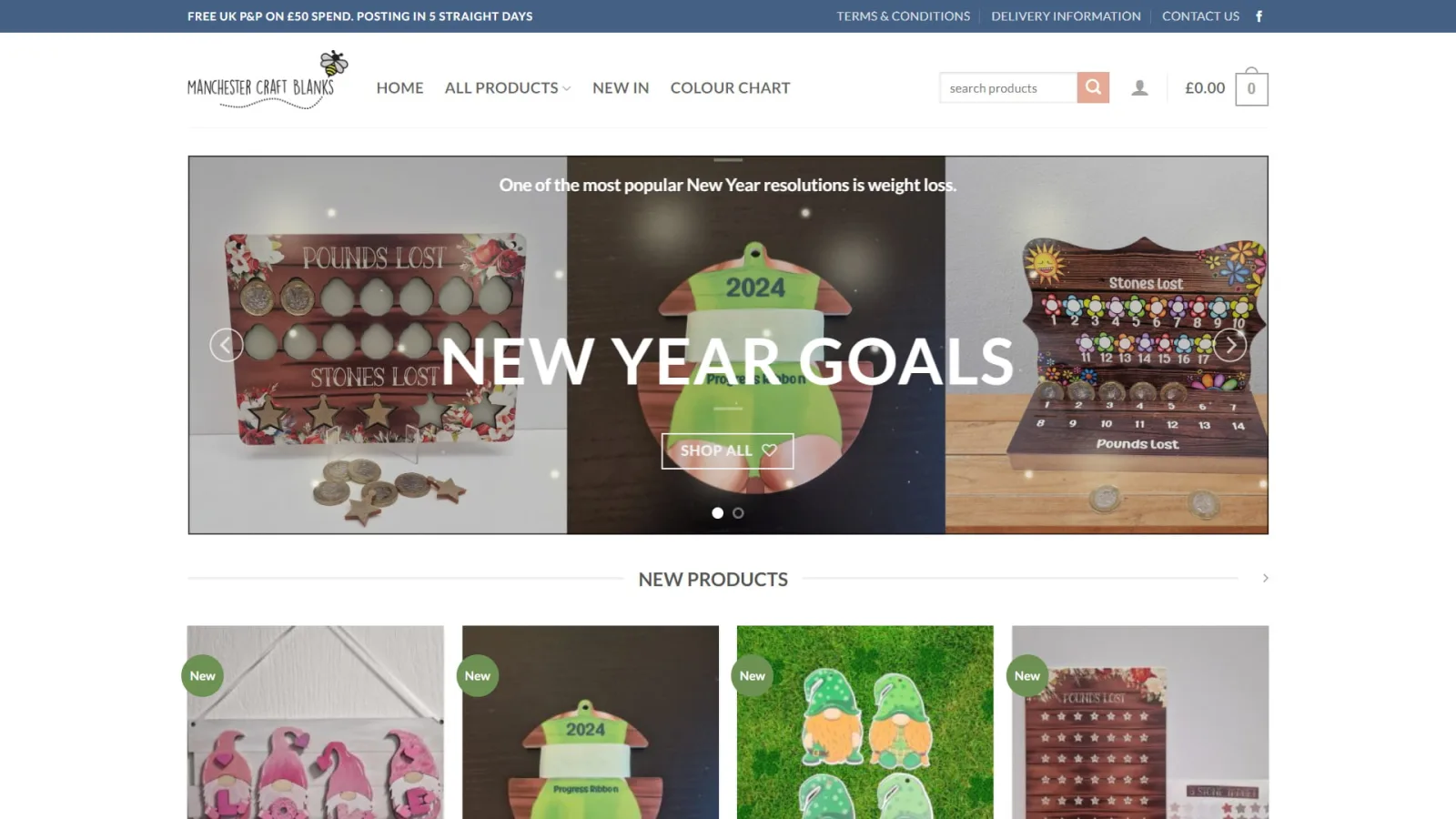
Manchester Craft Blanks supply the plain items other people personalise, and they have been selling them online with us since 2019. The shop now carries a large catalogue, a busy order flow and a mix of standard and personalised products. At that scale, most of the work is keeping a fast-moving shop running smoothly.
Payment configuration, sorted with the vendor
On a busy shop, payment work is done methodically and with the provider.
In 2026 we worked through a payment gateway configuration change with the payment vendor. We arrived with the configuration already traced and documented, so the change was made quickly.
Hosting first, then the server underneath it
A shop this size needs hosting and server behaviour that match its traffic.
When we took the shop on in 2019 we migrated the entire installation onto UK hosting, closer to the customers buying from it.
In 2020 we overhauled that server, and one change did most of the work. WordPress runs its own scheduler off visitor traffic by default, which means the busier a shop gets, the more work each visit is quietly asked to do. We moved scheduling onto a proper server cron, where it runs on a clock instead of on customers. We also tuned the mail configuration, because order confirmations are the one thing a shop must deliver every single time.
A rebuild for the next stage of growth
A growing shop eventually deserves a build designed for the size it has become.
By 2023 the shop had grown well beyond what it was first built for, so we rebuilt it cleanly for the size it had become. The shop running today is the one that came out of that rebuild.
What the shop actually does
The shop mixes standard products with personalised ones, so clarity and automation matter.
The business has two sides:
- A large catalogue of craft blanks, sold to customers who personalise them in their own workshops and studios.
- A browser-based product designer, where customers can upload artwork, add text and preview personalised items before ordering.
The designer is one part of the operation rather than the whole of it, but it turns the catalogue into a starting point rather than a finished range.
Behind it, the shop is integrated with Xero, so the accounting side is fed automatically by orders rather than re-keyed from them. At this scale that is not a convenience. It is the difference between bookkeeping and typing.
The pattern underneath all of it
Every significant change has removed manual work rather than added new features.
Every significant change on this shop has removed work rather than added it. The scheduler stopped running off customers. The accounts stopped being re-keyed from orders. The designer let customers do the personalising themselves.
A shop this size does not get easier by having more put into it. It gets easier when things stop being done by hand.
Common questions
Can you work with payment providers on gateway configuration?
Yes. On this shop we traced and documented the gateway configuration ourselves and took it straight to the payment vendor, so the change was made quickly.
Can you move a WooCommerce shop to new hosting without downtime?
Yes. We moved Manchester Craft Blanks onto UK hosting and kept the shop trading throughout. The previous server stayed reachable until everything was confirmed.
Why does WordPress scheduling matter on busy shops?
Because WordPress runs scheduled tasks off visitor traffic by default. The busier the shop, the more work each customer visit is quietly asked to do. Moving scheduling onto a proper server cron removes that hidden load.
Can you rebuild a WooCommerce shop without losing orders or customers?
Yes. When the shop outgrew its original build, we rebuilt it cleanly. The new version preserved all orders, customers and catalogue data.
Do you support product designers and personalised items?
Yes. The designer is integrated into the shop so customers can upload artwork, add text and preview personalised items. It is one part of the operation, but it turns the catalogue into a starting point rather than a finished range.
Can you integrate WooCommerce with Xero properly?
Yes. Orders feed directly into Xero, removing manual re-keying. At this scale that is not a convenience, it is the difference between bookkeeping and typing.
Do you handle ongoing work as well as major rebuilds?
Yes. Most of the work on a high-volume shop is keeping it running smoothly: maintaining performance, and ensuring the accounting and designer integrations keep working cleanly.
If your own shop has reached the size where the interesting problems live in the database rather than the front end, that is the work worth buying. A free audit covers the places a dashboard does not: the database, the server and the configuration.
Start with the audit; it is the quickest way to see what is worth doing first.