Most of the visibility losses an online shop suffers are not editorial mistakes. They are architectural ones. A migration that changed every URL, a category structure built for internal stock handling rather than how customers search, a product feed that quietly stopped being accepted, a theme that has drifted so far from the platform that pages now load slowly on a phone. None of that is fixed by writing more content. All of it is fixed in the same place the shop is built.
That is the work we do. We are not a search agency that occasionally touches websites. We are the people who look after the shop, which means the search work and the development work are the same job done by the same person, and nothing gets lost between two suppliers.
What the work actually is
- Keeping the equity you already have. Every migration we run maps legacy URLs before anything goes live. It is the cheapest search work there is, and the most expensive mistake to skip.
- Category and URL architecture built around how people search, not how stock is organised internally.
- Technical foundations: structured data, clean URLs, crawl and indexing behaviour that large catalogues need.
- Product feeds submitted, corrected and monitored, so listings do not disappear from Google Shopping without anyone noticing.
- Speed, which is a search problem and a conversion problem at the same time, with the same fix for both.
- Knowing which traffic is worth having. A growing share of what arrives at a shop is automated, and a rule that blocks all of it also blocks the places people increasingly search.
What this looks like on real shops
Eight of our case studies describe search work. They are the argument for this page, so here is where to find them rather than a list of claims.
- NFC Direct: migrated from PrestaShop to WooCommerce with every legacy URL mapped, so years of visibility came with them.
- Bluebell Arboretum: theme rebuilt and navigation redesigned around existing category URLs, so nothing earned in search was thrown away for a tidier structure.
- Cheviot Trees: ongoing technical SEO plus a Google Shopping feed watched closely enough to catch sudden listing drops.
- MiniVet Guide: courses delivered on a hosted platform that owned its URLs. Bringing that content onto the shop was an architectural decision made for search reasons.
- MayDay Seals: began with a written audit, and now runs behind rules tuned to separate useful automated traffic from pure cost.
- Bay Shelving: continuous work on terms like warehouse shelving and garage shelving, alongside structured data and rebuilt category architecture.
- Electols: search built for how engineers buy, with part numbers and fragments matched inside the word rather than only at the start.
- Which Wedding Venue: moved more than 1,600 listings onto a new platform with every legacy URL mapped to a redirect through a re-runnable import.
PrestaShop SEO, WooCommerce SEO, and why the distinction matters less than it looks
People search for their platform, and the platform does change the specifics. On PrestaShop, a great deal turns on how the theme was built and whether it has kept up with the platform beneath it, because a theme that has drifted takes page speed and structured data with it. On WooCommerce, more of it turns on what has been installed over the years and what each addition does to the page.
What does not change is the order of work.
- Find what the shop is losing.
- Keep what it has already earned.
- Fix the structural problems before the editorial ones.
A shop several versions behind with a broken feed does not need a content plan yet.
What we do not do
- We do not sell link building.
- We do not report on positions for terms nobody buys from.
- We do not promise a ranking, because nobody honest can.
What we will tell you is what is structurally wrong with the shop, what it is costing, and which of it is worth fixing first.
Usually part of looking after the shop
On most of the shops above, the search work is not a separate engagement. It happens because we are already looking after the shop and notice a feed rejecting products or a page that has grown slower every year. That is generally the cheapest way to buy it, and it is why a feed problem gets caught in the week it starts rather than the quarter it is reported.
It can also be a piece of work on its own, starting with an audit and a written list of what is worth doing in what order.
Shops we look after.
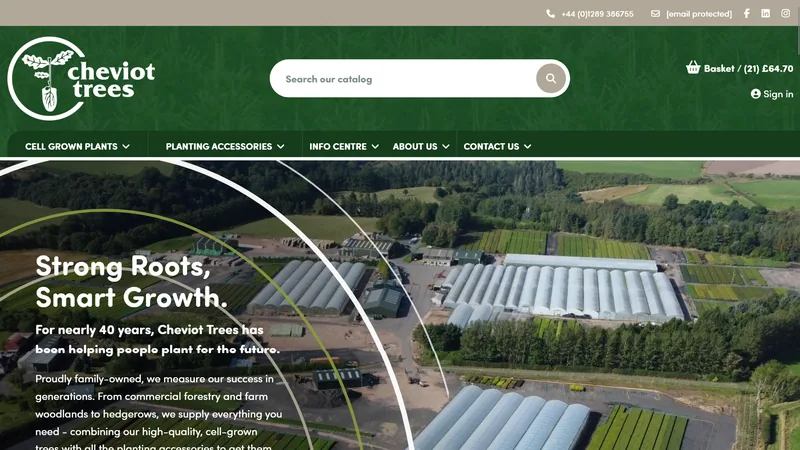
Cheviot Trees
Long-running PrestaShop development for a busy UK tree nursery
Cheviot Trees grow and supply cell-grown trees and hedging across the UK. We have looked after their PrestaShop installation for several years, covering development, payments, performance, security and search.
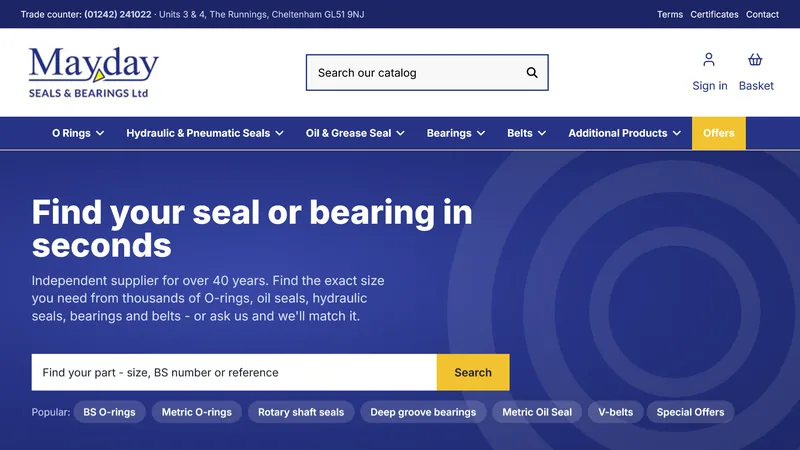
MayDay Seals
Long-running PrestaShop support for an established industrial supplier
Continuous support for a Cheltenham supplier of industrial sealing and pneumatic control products since 2018, covering hosting migrations, a full rebuild, payment compliance and a redesign.
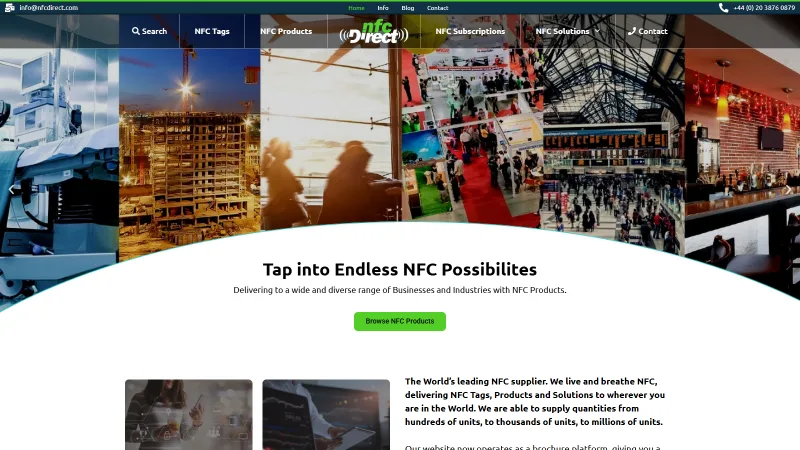
NFC Direct
A clean redesign and migration from PrestaShop to WooCommerce
A redesign and a platform migration for a UK supplier of NFC tags and contactless products, moving a PrestaShop shop onto WooCommerce.
Will a migration lose my search rankings?
Not if the URLs are mapped before it goes live. That mapping is part of every migration we run, and it is the single thing most likely to be skipped by somebody quoting cheaply. NFC Direct changed platform entirely and kept theirs.
Do you guarantee a position?
No, and neither should anybody else. What we will tell you before you spend anything is what is structurally wrong, what it is likely costing, and which of it is worth fixing first.
My products have disappeared from Google Shopping. Is that SEO?
It is a feed problem, and it is one of the most common ways a shop quietly loses visibility without anything looking broken. Feeds get rejected for reasons that are not announced, so they need watching rather than submitting once.
Do I need to move platform to fix this?
Usually not. Most of what costs a shop its visibility is fixable without a rebuild, and an audit will tell you whether yours is one of the exceptions before you commit to anything.
Do you write content as well?
We build the structure content sits in, and we will tell you where content is genuinely the gap. On a shop several versions behind with a broken feed, it is not the gap yet.
Start with an audit
A free audit covers the search side alongside the technical one, because on a shop they are rarely separable. You get the written recommendations to keep whether you go on to work with us or not, and nobody will chase you afterwards.